
en

 English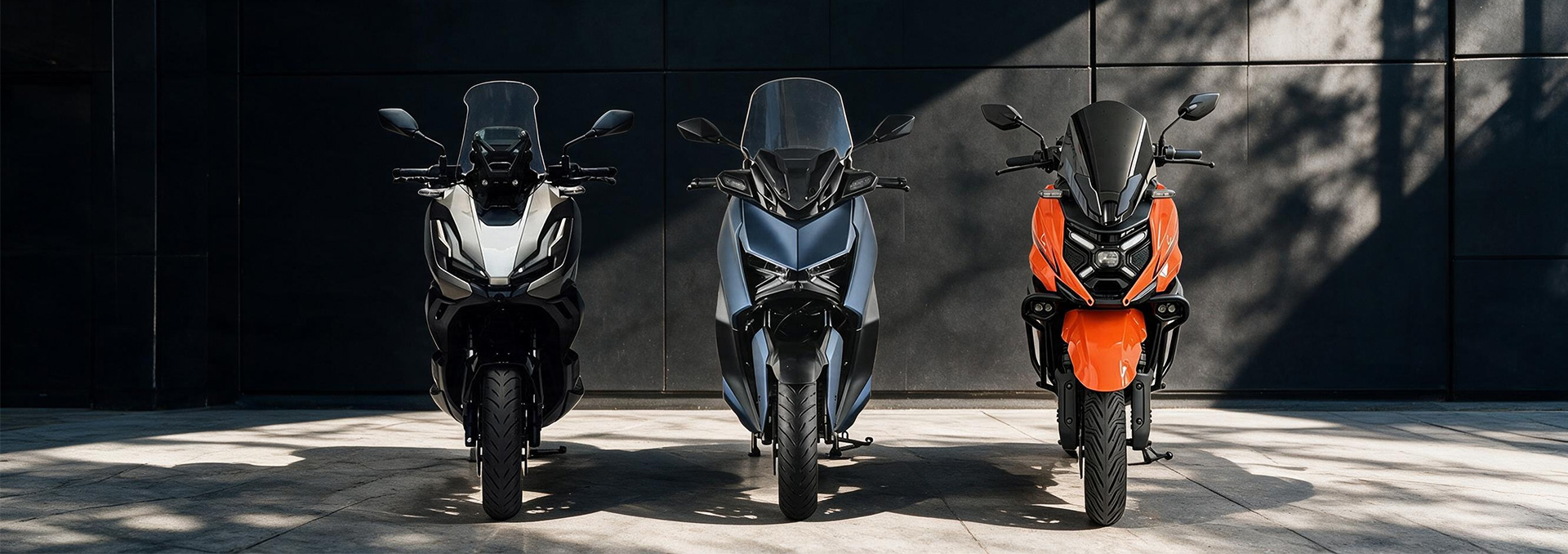
Home / News / Industry News / Power Meets Comfort: How Mid-Displacement Maxi Scooters Are Redefining Long-Distance Riding
Power Meets Comfort: How Mid-Displacement Maxi Scooters Are Redefining Long-Distance Riding
350CC–400CC Maxi Scooters Gain Traction in Leisure and Touring Markets Worldwide
The maxi scooter segment has long occupied a distinct position in the two-wheeler market, bridging the gap between conventional scooters and mid-displacement motorcycles. Within this category, the 350CC–400CC range has emerged as a notable sweet spot, offering riders a balance of power, comfort, and practicality that suits both daily commuting and extended leisure travel.
Market Overview: Steady Growth with Regional Variation
The global maxi scooter market has maintained a moderate growth trajectory in recent years, though estimates vary across research firms due to differences in product scope and methodology. PW Consulting values the worldwide market at approximately USD 14.85 billion in 2025, projecting growth to USD 22.51 billion by 2032 at a compound annual growth rate of 6.12%. Market Research Future places the 2025 figure at USD 12.08 billion, with a projected reach of USD 18.1 billion by 2035 and a CAGR of 4.13%. Persistence Market Research estimates the 2026 market at USD 12.6 billion, growing to USD 16.7 billion by 2033.
Europe remains the largest regional market. According to PW Consulting, Europe accounted for an estimated 41.6% of global market value in 2025, reaching approximately USD 6.18 billion. Italy, France, and Germany together represent a substantial portion of European demand, supported by established scooter cultures, dense urban environments, and well-developed touring infrastructure. Emergen Research notes that these three countries account for roughly 45% of worldwide maxi scooter sales volume.
Asia Pacific is identified as the fastest-growing region, with an estimated CAGR of 8.7% according to Emergen Research, driven by expanding middle-class populations, improving road infrastructure, and increasing disposable income in key markets.
The 350CC–400CC Segment: A Balanced Proposition
Within the maxi scooter category, the 250CC–400CC engine displacement range is widely recognized as one of the most popular segments, according to Strategic Revenue Insights, offering a favorable balance between performance and fuel efficiency. Data from the Italian two-wheeler market illustrates this trend: the 251–350CC class accounts for approximately 19% of total volume, while machines above 350CC represent roughly 26%, generating the largest share of market value.
The 350CC–400CC range specifically addresses riders who require more capability than entry-level scooters can provide but prefer the step-through convenience and automatic transmission that characterize scooter design. High-displacement gasoline engines in this range deliver strong power output and responsive acceleration, making highway merging and sustained cruising at higher speeds more manageable compared to smaller-displacement alternatives.
Models such as the Honda ADV 350 have demonstrated strong market reception in Europe, where it has ranked among the best-selling scooters above 300CC in recent years, with cumulative European sales exceeding 76,000 units through 2024 according to industry reports. Competitors in the segment include Yamaha's XMAX series and offerings from Kymco and SYM, indicating a competitive but growing market landscape.
Design and Engineering Priorities
350CC–400CC gasoline scooters are engineered with specific priorities that distinguish them from smaller commuter models. Robust frame structures provide the rigidity needed for stable handling at higher speeds and under varied load conditions. Enhanced suspension systems, often featuring telescopic front forks and adjustable rear shock absorbers, contribute to ride comfort over long distances and across different road surfaces.
Other common features in this segment include larger wheel diameters for improved stability, spacious under-seat storage capable of accommodating full-face helmets, windshields for highway wind protection, and instrument clusters with comprehensive ride information. Fuel tank capacities are typically larger than those of entry-level scooters, extending range and reducing the frequency of refueling stops on touring routes.
Leisure, Touring, and Long-Distance Applications
While urban commuting remains the largest usage segment for maxi scooters overall — accounting for over 50% of market share according to Strategic Revenue Insights — the 350CC–400CC category is particularly well-suited to leisure riding and touring applications. Riders in this segment often use their vehicles for weekend getaways, coastal rides, and multi-day tours, where the combination of automatic transmission convenience, adequate power, and comfortable ergonomics becomes especially valuable.
The step-through design remains a key differentiator from traditional motorcycles, allowing riders to mount and dismount without swinging a leg over the seat — a feature appreciated by riders of varying ages and physical abilities, and one that contributes to the segment's broad demographic appeal.
B2B Supply: OEM, ODM, and Quality Control
For distributors, dealers, and brand customers targeting premium scooter markets with higher performance requirements, the ability to source reliable 350CC–400CC models at scale is a critical business consideration. Established manufacturers offer OEM and ODM customization services covering color options, logo placement, industrial design, and product specifications, enabling brand partners to differentiate their offerings in competitive local markets.
Strict quality control processes, stable production capacity, and full-container delivery support are standard expectations from international business customers. Wholesale supply arrangements allow distributors to maintain inventory levels aligned with seasonal demand patterns, which in the maxi scooter segment typically peak during spring and summer months in temperate markets.
Previous Post
OEM Customization and Stable Supply Position 1500W–2000W Electric Scooters for Global Distribution
Next Post
Electric Scooters Reshape Urban Mobility as Global Market Continues to Expand
Related products
Copyright © TAIZHOU XINGCHENG TECHNOLOGY CO.,LTD. All Rights Reserved
